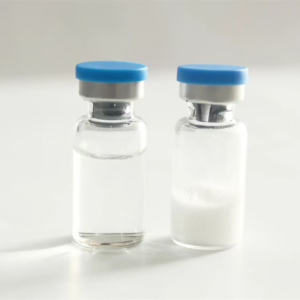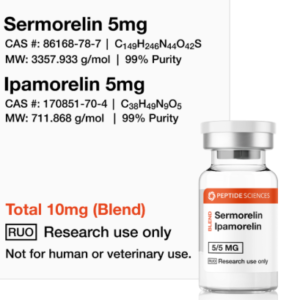

Sermorelin and ipamorelin are synthetic peptide analogs frequently examined in parallel within laboratory research settings to study growth hormone axis regulation. Sermorelin is a truncated analog of growth hormone–releasing hormone (GHRH), while ipamorelin is a highly selective agonist of the growth hormone secretagogue receptor (GHS-R1a). Their combined use in experimental models allows investigation of coordinated receptor activation within endocrine signaling networks.
Biochemical Characteristics
Sermorelin is composed of the first 29 amino acids of endogenous GHRH and retains high affinity for the GHRH receptor. Ipamorelin is a pentapeptide engineered for selective ghrelin receptor engagement with minimal interaction with other pituitary hormone pathways in comparative assays. Both peptides demonstrate structural features optimized for receptor specificity in controlled research environments.
Research Applications
In preclinical research, sermorelin is utilized to study GHRH-mediated signaling, somatotroph activation, and downstream transcriptional regulation. Ipamorelin is employed to evaluate ghrelin receptor signaling dynamics, calcium mobilization, and secretagogue pathway selectivity. Combined experimental paradigms focus on endocrine pulsatility, receptor cross-talk, and downstream molecular responses.
Pathway / Mechanistic Context
Sermorelin activates the GHRH receptor, initiating Gs-protein–coupled signaling that elevates intracellular cAMP and activates protein kinase A–dependent transcriptional pathways. Ipamorelin binds to GHS-R1a, stimulating phospholipase C activity and intracellular calcium release. In combination, these peptides are studied for their complementary modulation of growth hormone regulatory circuits in animal and cellular models.
Preclinical Research Summary
Animal and in-vitro studies have investigated GHRH and ghrelin receptor expression in cardiac, neural, skeletal, and gastrointestinal tissues. Experimental findings include observations related to cellular survival signaling, inflammatory marker modulation, vascular remodeling processes, neural receptor interactions, skeletal metabolism markers, pancreatic signaling pathways, and gastrointestinal motility models. All findings originate from preclinical laboratory research and are used solely to advance mechanistic understanding.
Form & Analytical Testing
Sermorelin and ipamorelin are supplied as lyophilized peptides for laboratory research use. Analytical verification commonly includes high-performance liquid chromatography (HPLC) and mass spectrometry to confirm peptide identity, purity, and batch consistency prior to experimental application.
Article Author
Research by L. Edmiston, M.D. for Peptide Sciences. L. Edmiston holds an M.D. from Case Western Reserve University School of Medicine and a B.S. in molecular biology.
Scientific Journal Author
Richard F. Walker, Ph.D, R.Ph, lead author of A better approach to management of adult-onset growth hormone insufficiency?”, received a BS in pharmacy from Rutgers University, a MS in Biochemistry from New Mexico State University and a PhD in a physiology from Rutgers University. He holds postdoctoral fellowships in neuroendocrinology and neuropharmacology at Duke University College of Medicine (Center for the Study of Aging and Human Development) and the University of California, Berkeley, respectively.
Richard F. Walker, Ph.D, R.Ph is being referenced as one of the leading scientists involved in the research and development of Sermorelin. In no way is this doctor/scientist endorsing or advocating the purchase, sale, or use of this product for any reason. There is no affiliation or relationship, implied or otherwise, between Peptide Sciences and this doctor. The purpose of citing the doctor is to acknowledge, recognize, and credit the exhaustive research and development efforts conducted by the scientists studying this peptide. Richard F. Walker, Ph.D, R.Ph is listed in [11] under the referenced citations.