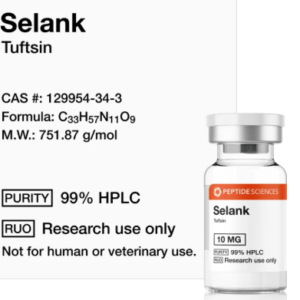
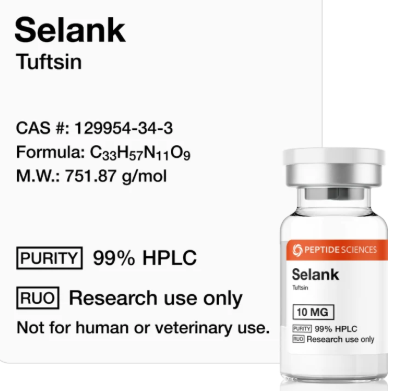
Selank is a synthetic heptapeptide structurally derived from the endogenous peptide tuftsin. In laboratory research, Selank is studied as a molecular probe for investigating neurochemical signaling, gene expression regulation, and peptide-mediated modulation of immune and neuroendocrine pathways. Experimental studies focus on its biochemical interactions in controlled cellular systems and in vivo animal models.
Biochemical Characteristics
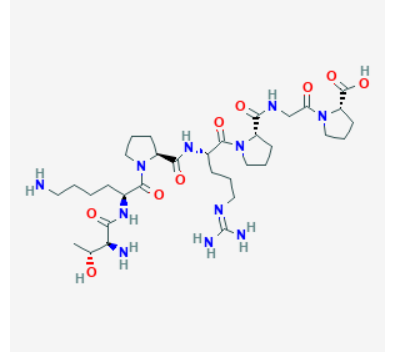
Sequence: Thr-Lys-Pro-Arg-Pro-Gly-Pro
Molecular Formula: C33H57N11O9
Molecular Weight: 751.87 g/mol
CAS Number: 129954-34-3
Synonyms: Selanc
Research Applications
Selank is utilized in preclinical research environments to examine peptide-driven modulation of molecular signaling networks. Common experimental applications include:
- Gene expression profiling related to neurotransmitter-associated pathways
- Investigation of GABAergic signaling components in rodent neural tissue
- Analysis of enkephalin-degrading enzyme activity in biochemical assays
- Immune-related gene transcription studies involving cytokines and chemokines
- Evaluation of peptide stability and receptor-associated signaling dynamics
Pathway / Mechanistic Context
Mechanistic studies indicate that Selank participates in modulation of intracellular signaling cascades associated with GABAergic neurotransmission, monoaminergic balance, and immune-related transcriptional regulation. In animal models, Selank exposure has been associated with altered expression of genes involved in receptor signaling, enzymatic degradation pathways, and cytokine-mediated communication.
Additional investigations have examined Selank-related modulation of enkephalinase activity, suggesting an indirect influence on endogenous peptide turnover and receptor-ligand availability at the molecular level.
Preclinical Research Summary
Preclinical studies involving Selank have primarily utilized rodent models and in vitro biochemical systems. Published data describe changes in transcriptional profiles of neural and immune tissues, including genes associated with inflammatory signaling, neurotransmitter receptor modulation, and stress-responsive pathways.
Animal-based experiments have further evaluated Selank as a tool for studying peptide-mediated regulation of gene networks involved in neuroimmune communication. These investigations emphasize pathway-level observations rather than organism-level outcomes.
Form & Analytical Testing
Selank is supplied as a synthetic research peptide. Analytical verification typically includes high-performance liquid chromatography (HPLC) and mass spectrometry (MS) to confirm identity, purity, and molecular mass. These analytical methods support consistency and reproducibility in laboratory research workflows.
Article Author
The above literature was researched, edited and organized by Dr. Logan, M.D. Dr. Logan holds a doctorate degree from Case Western Reserve University School of Medicine and a B.S. in molecular biology.
Scientific Journal Author
Dr. Petr Slominsky’s 169 research works with 803 citations. 12 of those papers pertain to the examination of Selank’s diverse, multifaceted effects e.g. anxiety reduction, changes in the transcription profile of the hippocampus, and changes in expression of the genes for chemokines, cytokines, and their receptors. Dr. Slominsky is particularly interested in the epigenetic effects of Selank and other disease-state pathologies.
Dr. Petr Slominsky is being referenced as one of the leading scientists involved in the research and development of Selank. In no way is this doctor/scientist endorsing or advocating the purchase, sale, or use of this product for any reason. There is no affiliation or relationship, implied or otherwise, between Peptide Sciences and this doctor. The purpose of citing the doctor is to acknowledge, recognize, and credit the exhaustive research and development efforts conducted by the scientists studying this peptide. Dr. Petr Slominsky is listed in [7] under the referenced citations.