1. Fibrinogen / IL-6-Linked Gene Programs
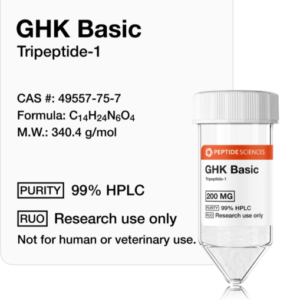
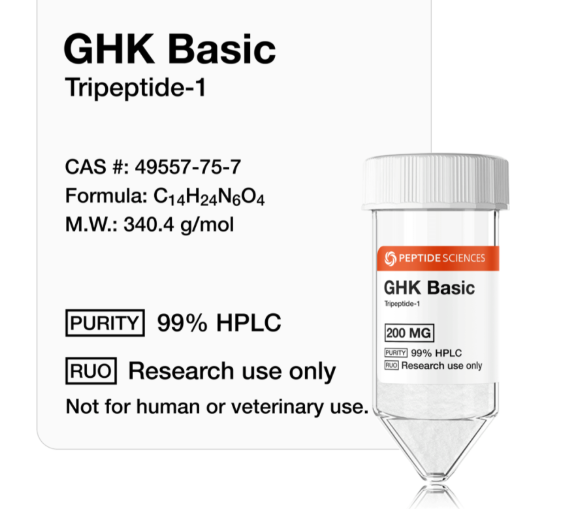
Preclinical gene-expression analyses summarized in the referenced literature describe GHK-associated modulation of inflammatory and acute-phase signaling, including IL-6-linked programs and fibrinogen-chain gene sets (e.g., FGB). These observations are typically reported from in vitro cellular systems and transcriptomic datasets used to infer pathway-level effects [1,4].
2. Ubiquitin/Proteasome System (UPS)
Reported transcriptional datasets include enrichment of ubiquitin–proteasome system (UPS) gene programs, a pathway class central to protein quality control and removal of damaged proteins. RUO studies use these readouts to map proteostasis-linked responses in cultured cells under defined experimental perturbations [2,4].
3. DNA Repair Gene Sets
Published analyses describe associations between GHK exposure and altered expression of DNA repair-related genes in in vitro models. In an RUO setting, these data are used as mechanistic background for selecting endpoints and validating pathway enrichment rather than for any intended-use interpretation [2,4].
4. Oxidative-Stress / Antioxidant Gene Programs
Gene-expression summaries in the cited references report changes in antioxidant and oxidative-stress-associated gene panels following GHK or GHK-Cu exposure in experimental systems. Such datasets are frequently used to study redox-response signaling and copper-dependent effects in cell culture [1,2].
5. Insulin / IGF-Like Signaling Signatures
Transcriptomic analyses discussed in the cited literature include modulation of insulin/IGF-like pathway gene sets. In preclinical research, these signatures are typically evaluated as part of broader systems-biology analyses to understand pathway coupling between metabolism-linked networks and stress-response programs [2,4].
6. TGF Superfamily-Associated Remodeling Programs
The referenced publications discuss GHK-associated gene programs that intersect with TGF superfamily signaling, a pathway group that regulates cell differentiation, ECM remodeling, and tissue-architecture-related transcriptional responses in many model systems. RUO studies may use these observations to guide mechanistic hypotheses and downstream validation experiments [1,3,4].
7. Cancer-Related Gene-Set Reversal Analyses
The cited literature includes discussions of gene-expression signature analyses in which compounds (including GHK in specified in vitro conditions) are evaluated for their ability to reverse predefined disease-associated transcriptional patterns. In an RUO context, these approaches are used as computational and experimental tools for pathway mapping and hypothesis generation in oncology-related model systems, without implying any intended use [2,4].
Conclusion
Across the cited publications, GHK and GHK-Cu are described primarily as research tools for probing multi-pathway gene expression, including ECM remodeling, proteostasis (UPS), oxidative-stress responses, and growth-factor/cytokine-linked signaling. These observations derive from preclinical datasets (cell culture systems, transcriptomic analyses, and model-based investigations) and are used to inform experimental design, endpoint selection, and mechanistic interpretation [1–4].
Any pharmacokinetic, tolerability, or administration statements from nonclinical reports should be interpreted strictly as preclinical background for experimental planning and are not indicative of suitability for any intended-use context.